

India’s air cargo sector takes flight in 2026 on e-commerce, pharma exports
Freight volumes rise 5.2% as infrastructure, digitalisation and sustainability drive expansion
India’s air cargo sector takes flight in 2026 on e-commerce, pharma exports
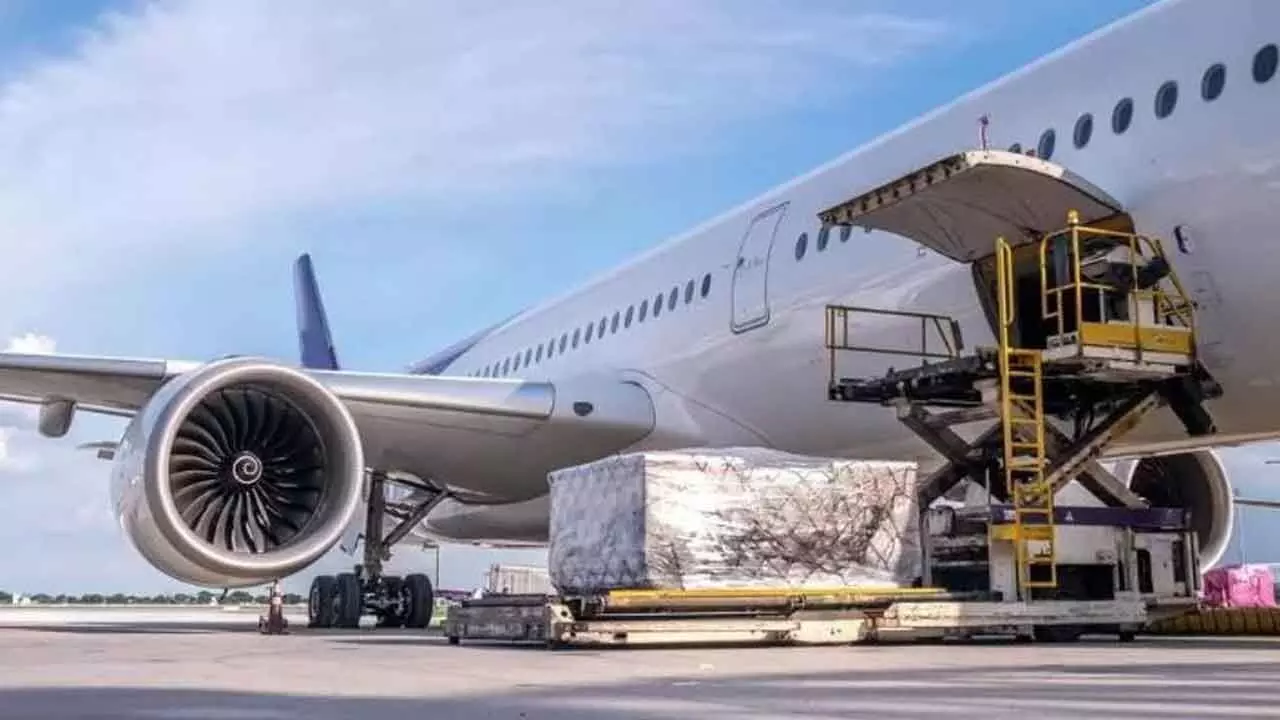
The Indian air cargo industry in 2026 is experiencing robust growth, driven by a 5.2% year-over-year increase in freight handling during the early part of FY26, particularly fueled by e-commerce and pharmaceutical exports. Major capacity expansions, including the new Noida International Airport and a 15% surge in India-US shipments in Jan 2026, highlight a strategic shift towards strengthening infrastructure, digitalization, and sustainability to become a global manufacturing hub.
“Air cargo delivered a strong performance in 2025, with demand up 3.4% year-on-year. Global e-commerce strength drove volumes, even as trading relationships with the US faced rising tariffs, the removal of de minimis tariff exemptions, and continuing policy uncertainty.
Air cargo rose to the occasion. It adapted quickly to support global businesses and supply chains as they front-loaded product deliveries ahead of tariff impositions and adjusted to rising demand within Asia and between Asia and Europe as US-Asia trade stagnated,” said Willie Walsh, IATA’s Director General.
Whatever trading patterns emerge, we can be confident that reliance on air cargo to keep global supply chains running will remain, with carriers responding to the challenge by deploying capacity and designing their networks for optimum flexibility,” said Walsh. In 2026, the global air cargo industry is experiencing a, with significant growth in capacity and a projected 26% increase in volume.
“Growth in 2026 is expected to moderate slightly to 2.4%, in line with historical trends. We can expect that demand will continue to be shaped by trade and geopolitical developments.
Total freight handling by AAI airports rose 5.2% (April–Nov FY26), with domestic cargo growing 6.5% and international by 4.4%. The industry is building capacity to meet a forecast requiring 3,300 new planes in South Asia by 2044.
High-value manufacturing, pharmaceutical, and e-commerce goods are driving demand, with air freight becoming a strategic necessity for reliability.
India is rapidly moving towards becoming the third-largest aviation market by 2026, with significant investment in cargo terminals. The industry is also focusing on strengthening regional connectivity, with significant growth in e-commerce, and a focus on Tier 2 and Tier 3 cities.
India has emerged as the world’s third-largest domestic aviation market, as per the Economic Survey. The number of airports increased to 164 in 2025 over a decade, compared to 74 in 2014, showing rapid infrastructure growth in the country. In FY25, Indian airports handled 412 million passengers, and the same is expected to rise to 665 million by FY31.
On the other hand, air cargo volume grew from 2.53 million metric tonnes (MMT) in FY15 to 3.72 MMT in FY25, driven by several key policy initiatives and reforms, as per the Economic Survey. The air cargo volume stood at 2.95 MMT in FY26 (until December 2025).
In Budget 2025, the government also focused on strengthening air connectivity and infrastructure. Under the UDAN scheme, the government launched 619 routes, connecting 88 airports. The government also announced a revamped UDAN programme to add 120 new destinations, with support for helipads and small airports in remote and hilly regions, including the North East.
India’s annual air passenger traffic crossed 350 million, making it the third-largest aviation market in the world. Over the past decade, domestic air travel grew by 10-12% annually, and the number of airports rose to 159. The government said it would develop 50 more airports by 2030.
Budget 2025 also proposed greenfield airports in Bihar, along with the expansion of Patna airport and a brownfield airport in Bihar. The industry has witnessed both phenomena in recent years. The closure of Russian airspace to European and North American carriers following geopolitical tensions forced immediate routing changes for cargo flights between Asia and Europe, adding flight time and fuel costs while reducing payload capacity on affected routes.
Airlines had to quickly deploy additional frequencies or larger aircraft to maintain effective capacity on these lanes. Following a conflict last year, Pakistan closed its airspace to Indian airlines and aircraft, with India imposing reciprocal restrictions on Pakistani carriers.
According to the latest reports, Pakistan has extended the ban on its airspace for Indian aircraft until February 24, 2026 (5.29 am), marking the tenth consecutive monthly extension. India is expected to reciprocate.
Simultaneously, broader shifts in global trade patterns, driven by supply chain diversification, nearshoring initiatives, and changing manufacturing footprints, are creating sustained changes in cargo demand across different corridors. India achieved its highest-ever electronics exports, valued at $47 billion, IT Minister Ashwini Vaishnaw said in a social media post.
The India-Middle East-Europe corridor has seen growing importance as companies seek alternatives to traditional China-centric supply chains, while Southeast Asian routes have absorbed manufacturing capacity shifted from other regions.





